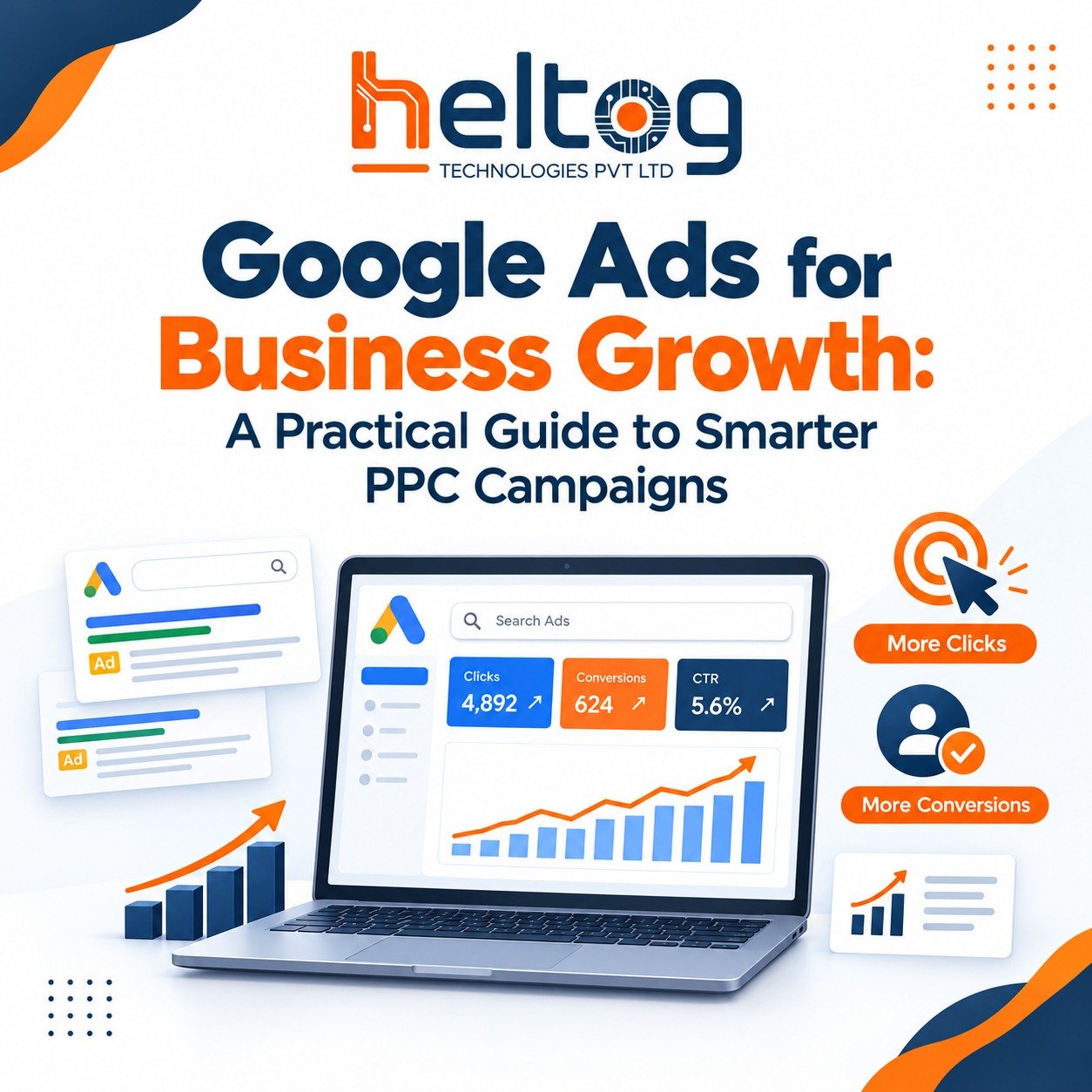
In today's competitive digital marketplace, having a website is only the first step toward building a successful online business. Companies also need effective ways to connect with potential customers who are actively searching for their products or services. This is where Google Ads can play an important role.
Google Ads is an online advertising platform that allows businesses to promote their offerings across relevant search results and other Google advertising placements. With the right strategy, businesses can reach relevant audiences, generate website traffic, attract enquiries and measure campaign performance.
However, successful advertising requires more than setting a budget and launching an advertisement. Businesses must understand customer intent, select relevant keywords, create compelling ad copy, optimize landing pages and monitor campaign results.
This guide explains how Google Ads works, which strategies can improve campaign performance, and how professional Google Ads management services can help businesses make more informed marketing decisions.
At Heltog Technologies , businesses can explore PPC management and digital marketing solutions designed around their marketing objectives.
What Is Google Ads and How Does It Work?
Google Ads is a paid advertising platform that helps businesses display ads to people searching for relevant products, services or information. Depending on the campaign type, advertisements may appear on Google Search, YouTube, websites and other supported placements.
For example, someone searching for “digital marketing agency in Noida” may see relevant search advertisements from agencies offering those services.
The advertiser defines campaign objectives, targeting, budget and bidding strategy. Google then uses its ad auction system to determine which eligible ads can appear and where they are positioned.
The objective is not simply to attract the highest number of clicks. It is to attract relevant visitors who are more likely to take a valuable action, such as submitting an enquiry, making a purchase or booking a consultation.
Why businesses use Google Ads
Relevant visibility: Reach people searching for products or services related to your business.
Budget control: Set campaign budgets and monitor advertising expenditure.
Measurable performance: Track impressions, clicks, conversions and other useful metrics.
Flexible targeting: Reach audiences based on eligible campaign settings, such as location, keywords and audience signals.
Campaign optimization: Use performance data to identify areas that need improvement.
Results vary depending on the industry, competition, offer, campaign setup and website experience. Paid advertising should therefore be managed as an ongoing process rather than a one-time activity.
1. Choose the Right Google Ads Campaign Type
The right campaign depends on your business goals, audience and the type of action you want customers to take.
Search Ads
Search ads help businesses connect with people actively searching for relevant products or services. They can be useful for service providers, local businesses and companies focused on lead generation.
Display Ads
Display campaigns use visual advertisements across eligible websites and placements. They can support brand awareness and help businesses reach relevant audiences beyond search results.
YouTube Ads
Video advertising can help businesses introduce products, demonstrate services and communicate their brand message through engaging visual content.
Shopping Ads
E-commerce businesses can use product-focused ads to showcase eligible products, images and pricing to potential shoppers.
Remarketing and other audience-focused approaches can also help businesses reconnect with eligible previous website visitors. The best campaign mix depends on your objectives, budget and available conversion data.
2. Conduct Keyword Research Before Launching Ads
Keyword research is one of the most important parts of a successful Google Ads campaign. It helps advertisers understand what potential customers are searching for and how closely those searches match the business's offerings.
Consider a digital marketing company targeting customers in Noida.
Potential keywords might include:
Google Ads agency in Noida
Google Ads management services
PPC advertising company in India
Google Ads services for small businesses
Lead generation services through Google Ads
These phrases reflect different search intentions. Someone searching for an agency may be ready to contact a service provider, while someone searching for a Google Ads tutorial may primarily want information.
Understanding this difference helps businesses select relevant keywords and create ads that match user expectations.
Use keyword match types strategically
Google Ads offers keyword matching options that help determine which searches may trigger an advertisement.
Broad match: Can reach a wider range of relevant searches.
Phrase match: Targets searches that include the meaning of the keyword phrase.
Exact match: Focuses more closely on searches sharing the keyword's meaning or intent.
Advertisers should also review their search terms report to identify irrelevant searches and add negative keywords when appropriate. This helps reduce unnecessary clicks and keeps campaigns aligned with their objectives.
3. Write Relevant and Compelling Ad Copy
Your ad copy often creates the first impression of your business. It should explain what you offer, communicate a genuine benefit and help users understand what they will find after clicking.
Effective ad copy usually includes three elements:
A relevant headline: Reflect the user's search and the service being offered.
A clear benefit: Explain how your service addresses the customer's needs without making unsupported promises.
A specific call to action: Encourage the next step, such as requesting a consultation, exploring services or contacting your team.
For example, a digital marketing agency could test the following Search ad messaging:
SAMPLE SEARCH AD
Google Ads Management Services
heltog.com/ppc-management-google-meta-ads/
Reach Relevant Customers with Strategic PPC Campaigns. Track Leads, Review Performance and Improve Your Campaigns with Data-Driven Optimization.
Explore PPC Services
Illustrative copy, not a live advertisement. Verify all claims and final URLs before publishing.
Advertisers should test different headlines and descriptions while keeping the message accurate and consistent with the landing page. Avoid exaggerated claims, misleading offers and guarantees of specific results.
4. Optimize Landing Pages for Better Conversions
Getting clicks is only one part of digital advertising. A landing page must help visitors find relevant information and complete the intended action.
Imagine that a user clicks an ad for Google Ads management but lands on a generic homepage where the service is difficult to find. The visitor may leave without enquiring, even if the advertisement attracted the right audience.
To improve the experience:
Match the landing page headline to the advertisement.
Explain the service, benefits and process clearly.
Make contact details easy to find.
Include a visible and relevant call to action.
Ensure the page works properly on mobile devices.
Improve loading speed and navigation.
Use secure forms and explain how customer information is handled.
Google Ads policies require advertisements and destinations to meet relevant editorial, technical and destination requirements. Clear information, functional pages and relevant content help build trust and provide a better user experience.
5. Track the Metrics That Matter
A Google Ads campaign should be evaluated using business outcomes, not clicks alone. The right metrics depend on whether your objective is lead generation, online sales, brand awareness or another measurable goal.
Metric
What it tells you
Impressions
How often your ad was shown
Click-through rate (CTR)
The percentage of impressions that generated clicks
Cost per click (CPC)
The average cost paid for each click
Conversion rate
The percentage of measured interactions that resulted in a conversion
Cost per conversion
The average advertising cost per recorded conversion
Return on ad spend (ROAS)
The conversion value attributed to ads relative to advertising spend
For example, if a campaign spends ₹10,000 and records 20 conversions, its cost per conversion is ₹500, assuming all 20 conversions are tracked correctly.
For e-commerce campaigns, if ₹10,000 in ad spend generates ₹40,000 in attributed conversion value, the ROAS is 4x, or 400%.
These calculations are only useful when conversion tracking is configured correctly. Lead quality, sales margins and actual revenue should also be considered when assessing profitability.
6. Optimize Your Google Ads Campaign Regularly
Launching a campaign is only the beginning. Regular monitoring helps businesses understand what is working, identify wasted spend and make improvements based on evidence.
A practical optimization process includes:
Review search terms: Identify searches that are relevant to your services and exclude unsuitable traffic.
Evaluate keyword performance: Compare clicks, conversions and costs instead of relying on click volume alone.
Test ad variations: Experiment with different headlines, descriptions and calls to action.
Check conversion tracking: Confirm that important actions, such as form submissions and purchases, are measured accurately.
Review landing pages: Identify usability problems that may prevent visitors from converting.
Adjust budgets carefully: Allocate more budget to campaigns that demonstrate valuable results, while considering profitability and available conversion data.
Avoid making major changes based on a handful of clicks. Allow sufficient time and data for meaningful evaluation, taking the campaign's traffic volume and conversion cycle into account.
7. Common Google Ads Mistakes Businesses Should Avoid
Even a well-funded advertising campaign can underperform when the fundamentals are overlooked.
Targeting overly broad keywords: Generic keywords may attract users whose needs do not match your offerings. Use keyword research and search-term analysis to improve relevance.
Sending every visitor to the homepage: Dedicated service or product landing pages can provide a more relevant experience.
Ignoring negative keywords: Excluding irrelevant searches can help control wasted advertising spend.
Failing to track conversions: Without reliable tracking, it becomes difficult to distinguish valuable traffic from clicks that do not contribute to business goals.
Making unrealistic claims: Avoid guaranteed rankings, guaranteed leads or promises of a specific return that cannot be substantiated. Google Ads prohibits misleading representations and unreliable claims.
Ignoring mobile users: A page that is difficult to navigate on a smartphone may lose potential customers, even when the ad itself is relevant.
Expecting instant profitability: Campaigns require testing, analysis and ongoing optimization. Advertising outcomes depend on multiple factors, and no agency can honestly guarantee a particular result for every business.
8. Why Professional Google Ads Management Matters
Managing Google Ads requires a combination of research, planning, analytical skills and continuous improvement. Business owners may understand their products and customers well but still find it challenging to manage keyword targeting, bidding, conversion tracking and campaign optimization alongside their daily responsibilities.
Professional PPC management can help bring structure to the process.
At Heltog Technologies, the PPC and Google Ads service offering includes Search Ads, Display Advertising, remarketing, YouTube Ads, Shopping Ads and landing page optimization. The service page also describes keyword-focused campaign planning, ongoing optimization, testing and performance reporting.
A structured approach typically includes:
Understanding business objectives and target audiences.
Researching relevant keywords and competitors.
Creating campaigns aligned with specific goals.
Developing relevant ad copy and landing page experiences.
Setting up appropriate conversion tracking.
Reviewing performance and identifying optimization opportunities.
Sharing reports that support informed marketing decisions.
The aim is to help businesses understand where their advertising budget is going and how campaign performance relates to their broader growth objectives.
Learn more about Heltog's PPC and Google Ads management services.
Frequently Asked Questions
1. What are Google Ads services?
Google Ads services involve planning, creating, managing and optimizing paid advertising campaigns on Google's advertising platform. Depending on the business, these services may include keyword research, Search Ads, Display Ads, Shopping Ads, remarketing, conversion tracking and landing page optimization.
2. How much does Google Ads cost in India?
The cost depends on your industry, competition, target keywords, campaign type and bidding strategy. Businesses can set budgets, but actual costs and results vary. A suitable budget should be determined by your objectives, expected acquisition costs and ability to convert visitors into customers.
3. How long does Google Ads take to generate leads?
A campaign can begin receiving traffic shortly after it becomes eligible to serve, but generating qualified leads is not guaranteed. Performance depends on targeting, competition, the offer, landing page quality and the time required for customers to make decisions.
4. Is Google Ads suitable for small businesses?
Yes. Small businesses can use Google Ads to target relevant searches, control campaign budgets and measure results. Starting with a focused campaign and clearly defined conversion goals can make performance easier to evaluate.
5. What is the difference between SEO and Google Ads?
SEO focuses on improving a website's visibility in organic search results, while Google Ads enables businesses to pay for eligible advertising placements. SEO can support long-term organic visibility, whereas paid campaigns can provide visibility while they are active. Combining both strategies can help businesses learn from shared keyword and conversion insights.
6. Why should businesses hire a Google Ads agency?
An experienced agency can help with campaign planning, keyword research, ad copy, tracking, landing page improvements and ongoing optimization. The value of professional management should be assessed through transparent reporting, relevant expertise and measurable progress toward business goals.
Conclusion: Build a Smarter Advertising Strategy with Heltog
Google Ads can be a valuable part of a business's digital marketing strategy when campaigns are built around customer intent, relevant messaging and measurable objectives. However, successful advertising involves more than generating clicks. Businesses need to attract the right audience, provide a useful landing page experience and measure the actions that contribute to growth.
From keyword research and campaign setup to conversion tracking and ongoing optimization, every stage plays a role in improving advertising performance.
For businesses looking to strengthen their paid marketing strategy, Heltog Technologies offers PPC and Google Ads management services designed to support lead generation, website traffic and measurable campaign improvement.
Explore Heltog's Google Ads management services or visit Heltog.com to discuss your digital marketing requirements.
Found this article helpful? Share it!
H
Written by
Heltog Team
Digital marketing and technology expert at Heltog Technologies. Helping businesses grow with smart digital solutions.
Leave a Comment
Your email address will not be published. Required fields are marked *